Be yourself; Everyone else is already taken.
— Oscar Wilde.
This is the first post on my new blog. I’m just getting this new blog going, so stay tuned for more. Subscribe below to get notified when I post new updates.
Be yourself; Everyone else is already taken.
— Oscar Wilde.
This is the first post on my new blog. I’m just getting this new blog going, so stay tuned for more. Subscribe below to get notified when I post new updates.
What?
In “Group Dynamics for Teams” Levi talks about how both cooperation and competition have an important role inside teams. Finding a way to balance them in order to find individual development and also reaching team goals is a big challenge. Either one of the extremes can hazard the team, extreme competition between teammates can make the group stop acting as a team, whilst the opposite takes away individual inspiration to grow personal abilities. Individual learning used to be the main objective before inside organizations but now they have realized that the main objective is team learning, and inside of that approach team members should evolve as well.
So what?
After realizing the importance of balancing this two ideas comes the time to find the way of how to balance them. A good way to do that it is to create different kinds of rewards, both personal and teams rewards but always reminding to the team that the team goal it is the most important task to accomplish. These rewards should also include individual prizes for good teammates, in other words, recognizing people that put the team before themselves and are always trying to get their partners to grow. It also depends in which situation you promote each kind of rewards, smaller tasks are a good opportunity to reward individual performance while, on the other hand, in greater objectives promoting team rewards would be more useful, for this purpose it is important to know how to and when to apply different rewards structures.
Going further into this topic, I take special interest in sports teams, this situations happen in a daily basis when talking about sports and I believe different organizations should pay attention how sport leaders and coaches manage this topic. First of all, a characteristic that it is not always mention but it is really important is inspiration. By selling an idea to the team, about union, about working together for a common goal and about how a team is much more than the sum of its parts, you can get awesome results in short time, because both individual and team growth will appear naturally when pushing together for a bigger goal.
Now what?
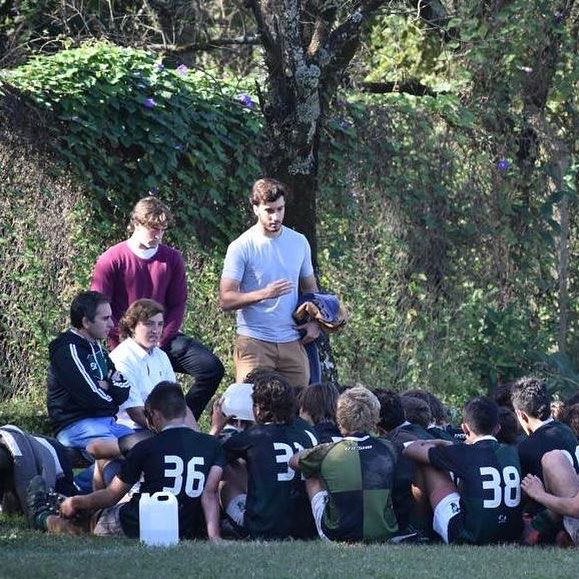
The main reason I found this topic interesting is because I am rugby coach of juvenile divisions back in Argentina, and coaching a team is difficult because you want players grow individually and also the team reaching their objective. Players often struggle with the idea of wanting the best for the team but at the same time understanding that sometimes that means they will not participate as much as they would want to. This reading has been useful for me in order to know when to promote individual growth and when to promote team growth and I will definitely use these tools when I go back to Argentina. To sum up, cooperation and competition are both necessary and healthy for a team but it is really important how we handle them if we do not want negative results as a consequence of not knowing how to apply them.
Sources:
Levi, D. (2015). Group dynamics for teams. Sage Publications.
Dechant, K., Marsick, V. J., & Kasl, E. (1993). Towards a model of team learning. Studies in Continuing Education, 15(1), 1-14.
Pearsall, M. J., Christian, M. S., & Ellis, A. P. (2010). Motivating interdependent teams: Individual rewards, shared rewards, or something in between?. Journal of Applied Psychology, 95(1), 183.
Oleynick, V. C., Thrash, T. M., LeFew, M. C., Moldovan, E. G., & Kieffaber, P. D. (2014). The scientific study of inspiration in the creative process: challenges and opportunities. Frontiers in human neuroscience, 8, 436.
What? In “Group Dynamics for Teams” Daniel Levi talks about the importance of Planning and Developing a Project (Appendix), there he provides different steps in order to accomplish the task of finding a good project to work as a group. There are many ways to approach this as a team and it also depends on the team members and the way they feel more comfortable at working which is the proper technique to apply in every case. The steps provided are simple and should be enough for a team to guide themselves into finding a new project.
So what? This topic in particular is of massive importance because doing one of these steps in a wrong way or choosing a path or technique that does not fit your team can be a real hazard to your team and the developing project. The real issue to attend is if these steps are fit to any kind of problem or project. There are different project levels of complexity and choosing one, taking into consideration the members of a team and whether they get involve into a project that is not too complex to solve or not too easy to be consider a waste of time is where relays the key to success on finding a suitable project. Industrial Engineer’s skills have a strong attachment to this kind of knowledge and, since it is what I am Majoring in, I pay good attention to this topic to correctly know which project is suitable for a specific teams according their capacities and differences.
Now What? As I have already mention before it is fundamental for my career to do a profound research in this subject to be able to successfully work in leadership positions within companies and industries. Not only that, I will use this as an incentive to continuously improve in this kind of matter with the final goal of learning how to correctly define projects and help others know if the projects they have chosen are the correct ones for them as well. To conclude this I introduce this Japanese term KAIZEN which means continuous improvement that in Industrial Engineering it is really important and which I think it is a goal we should all aim during our life and specially in team working.
Sources:
Levi, D. (2015). Group dynamics for teams. Sage Publications.
Smith III, H., Smarkusky, D., & Corrigall, E. (2008). Defining Projects to Integrate Evolving Team Fundamentals and Project Management Skills. Journal of Information Systems Education, 19(1).
Salvendy, G. (Ed.). (2001). Handbook of industrial engineering: technology and operations management. John Wiley & Sons.
Harvey, S. (2020). Kaizen: The Japanese Secret to Lasting Change—Small Steps to Big Goals. The Experiment.
This is an example post, originally published as part of Blogging University. Enroll in one of our ten programs, and start your blog right.
You’re going to publish a post today. Don’t worry about how your blog looks. Don’t worry if you haven’t given it a name yet, or you’re feeling overwhelmed. Just click the “New Post” button, and tell us why you’re here.
Why do this?
The post can be short or long, a personal intro to your life or a bloggy mission statement, a manifesto for the future or a simple outline of your the types of things you hope to publish.
To help you get started, here are a few questions:
You’re not locked into any of this; one of the wonderful things about blogs is how they constantly evolve as we learn, grow, and interact with one another — but it’s good to know where and why you started, and articulating your goals may just give you a few other post ideas.
Can’t think how to get started? Just write the first thing that pops into your head. Anne Lamott, author of a book on writing we love, says that you need to give yourself permission to write a “crappy first draft”. Anne makes a great point — just start writing, and worry about editing it later.
When you’re ready to publish, give your post three to five tags that describe your blog’s focus — writing, photography, fiction, parenting, food, cars, movies, sports, whatever. These tags will help others who care about your topics find you in the Reader. Make sure one of the tags is “zerotohero,” so other new bloggers can find you, too.

 Facu´s Blog