What?
In “Group Dynamics for Teams” Levi talks about how both cooperation and competition have an important role inside teams. Finding a way to balance them in order to find individual development and also reaching team goals is a big challenge. Either one of the extremes can hazard the team, extreme competition between teammates can make the group stop acting as a team, whilst the opposite takes away individual inspiration to grow personal abilities. Individual learning used to be the main objective before inside organizations but now they have realized that the main objective is team learning, and inside of that approach team members should evolve as well.
So what?
After realizing the importance of balancing this two ideas comes the time to find the way of how to balance them. A good way to do that it is to create different kinds of rewards, both personal and teams rewards but always reminding to the team that the team goal it is the most important task to accomplish. These rewards should also include individual prizes for good teammates, in other words, recognizing people that put the team before themselves and are always trying to get their partners to grow. It also depends in which situation you promote each kind of rewards, smaller tasks are a good opportunity to reward individual performance while, on the other hand, in greater objectives promoting team rewards would be more useful, for this purpose it is important to know how to and when to apply different rewards structures.
Going further into this topic, I take special interest in sports teams, this situations happen in a daily basis when talking about sports and I believe different organizations should pay attention how sport leaders and coaches manage this topic. First of all, a characteristic that it is not always mention but it is really important is inspiration. By selling an idea to the team, about union, about working together for a common goal and about how a team is much more than the sum of its parts, you can get awesome results in short time, because both individual and team growth will appear naturally when pushing together for a bigger goal.
Now what?
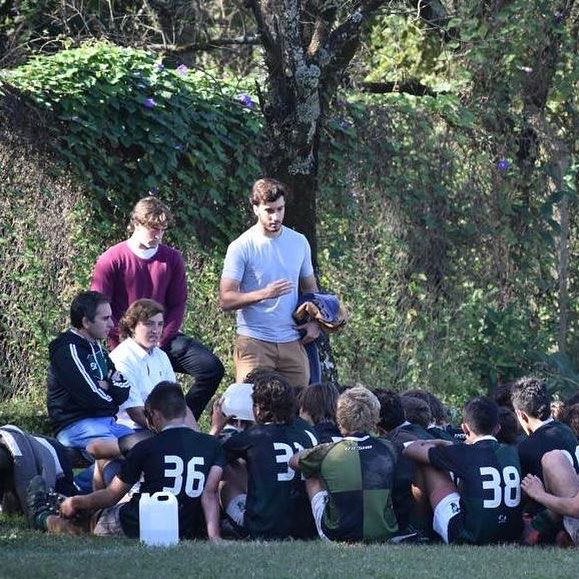
The main reason I found this topic interesting is because I am rugby coach of juvenile divisions back in Argentina, and coaching a team is difficult because you want players grow individually and also the team reaching their objective. Players often struggle with the idea of wanting the best for the team but at the same time understanding that sometimes that means they will not participate as much as they would want to. This reading has been useful for me in order to know when to promote individual growth and when to promote team growth and I will definitely use these tools when I go back to Argentina. To sum up, cooperation and competition are both necessary and healthy for a team but it is really important how we handle them if we do not want negative results as a consequence of not knowing how to apply them.
Sources:
Levi, D. (2015). Group dynamics for teams. Sage Publications.
Dechant, K., Marsick, V. J., & Kasl, E. (1993). Towards a model of team learning. Studies in Continuing Education, 15(1), 1-14.
Pearsall, M. J., Christian, M. S., & Ellis, A. P. (2010). Motivating interdependent teams: Individual rewards, shared rewards, or something in between?. Journal of Applied Psychology, 95(1), 183.
Oleynick, V. C., Thrash, T. M., LeFew, M. C., Moldovan, E. G., & Kieffaber, P. D. (2014). The scientific study of inspiration in the creative process: challenges and opportunities. Frontiers in human neuroscience, 8, 436.
 Facu´s Blog